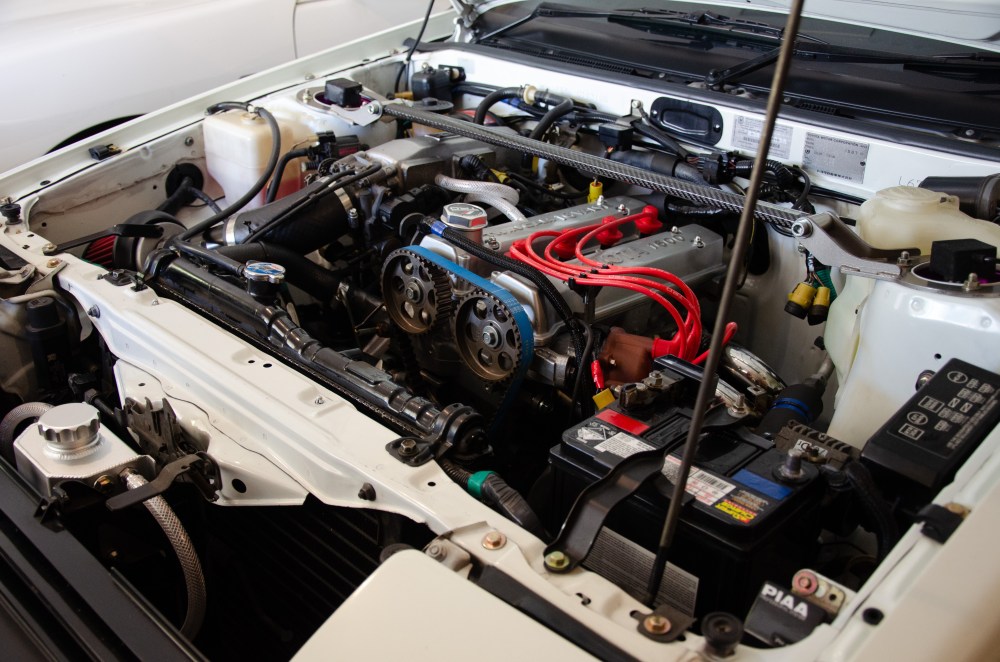
Didn’t manage to get my ITB setup working for now… decided to put the T-VIS unit back in for the time being… 🙂
I guess I needed to ensure all the assembled parts worked anyway… so I might be doing myself a favour by starting from a reliable base 🙂
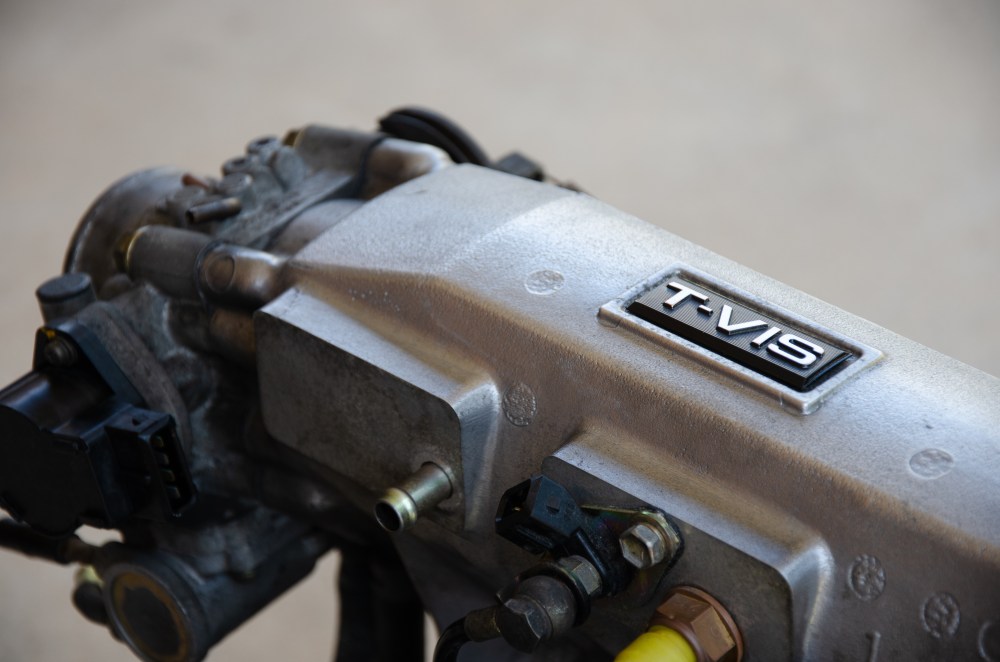
For those curious about the T-VIS, here it is in a nutshell:
Like many intake manifolds, its main purpose is to deliver correct amounts of air into the combustion chamber according to engine speed. This is typically accomplished by mechanical means.
At low engine speeds, air won’t travel fast enough into the chambers to create the level of pressure and density required to combust each stroke ‘adequately’. When you solve that problem… the whole mechanism then becomes restrictive at high speeds.
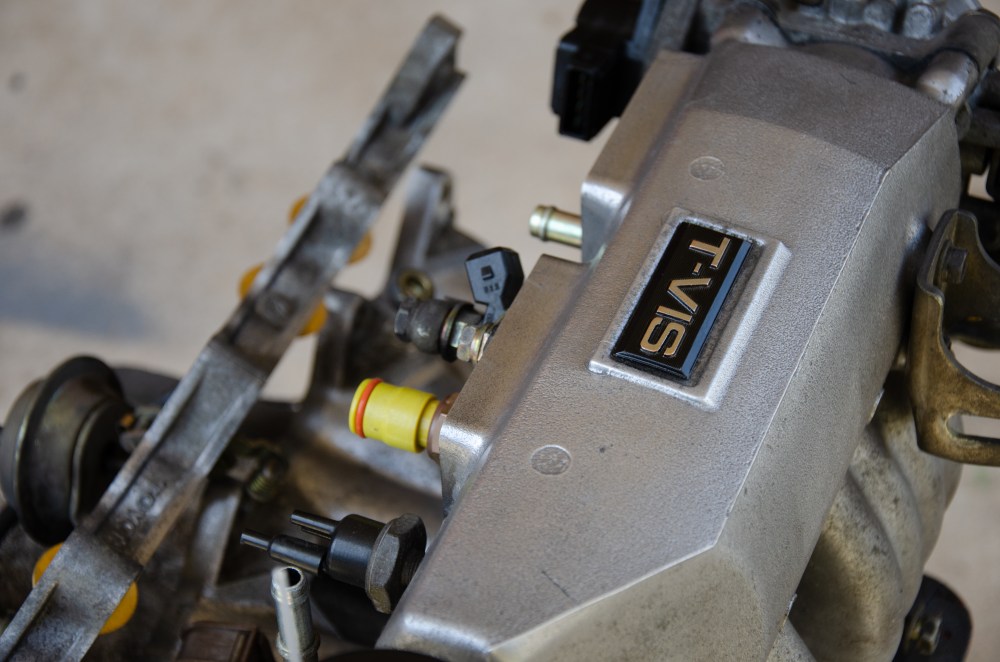
In the case of the T-VIS, its design simply consists of an array of tunnels with a set of butterfly valves over them:
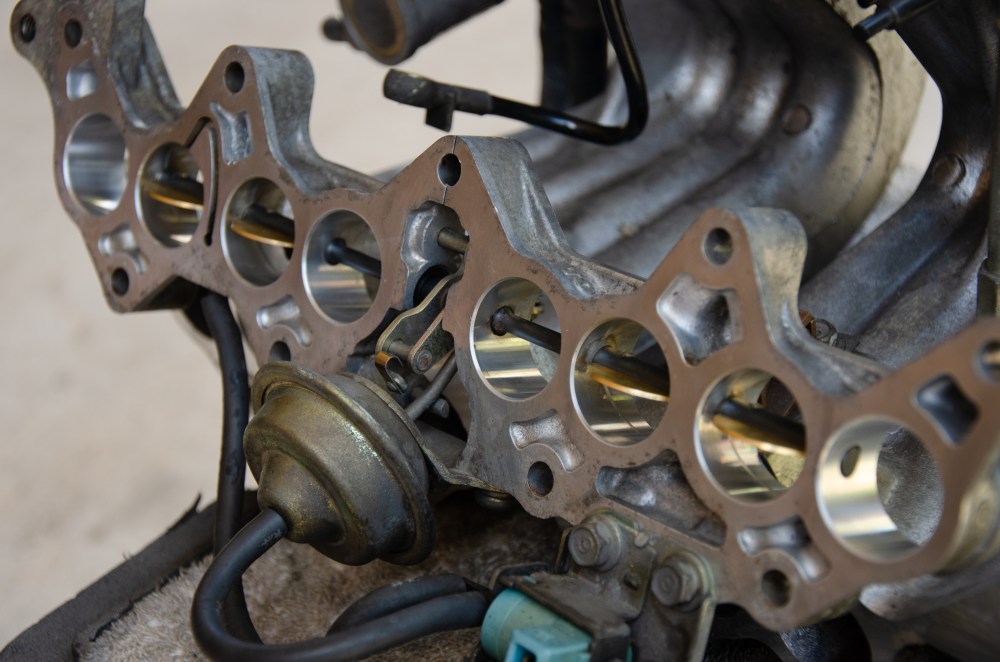
At low engine speeds, the butterfly valves close over, causing air velocity to increase in remaining tunnels.
At normal to higher engine speeds, the butterfly valves open up to feed more air into the chambers (correct amount of air depending on the operating speed).

The butterfly valves are controlled by vacuum (the bell-looking thing). When enough vacuum is collected, an actuator is pushed, which levers the butterfly valves open:
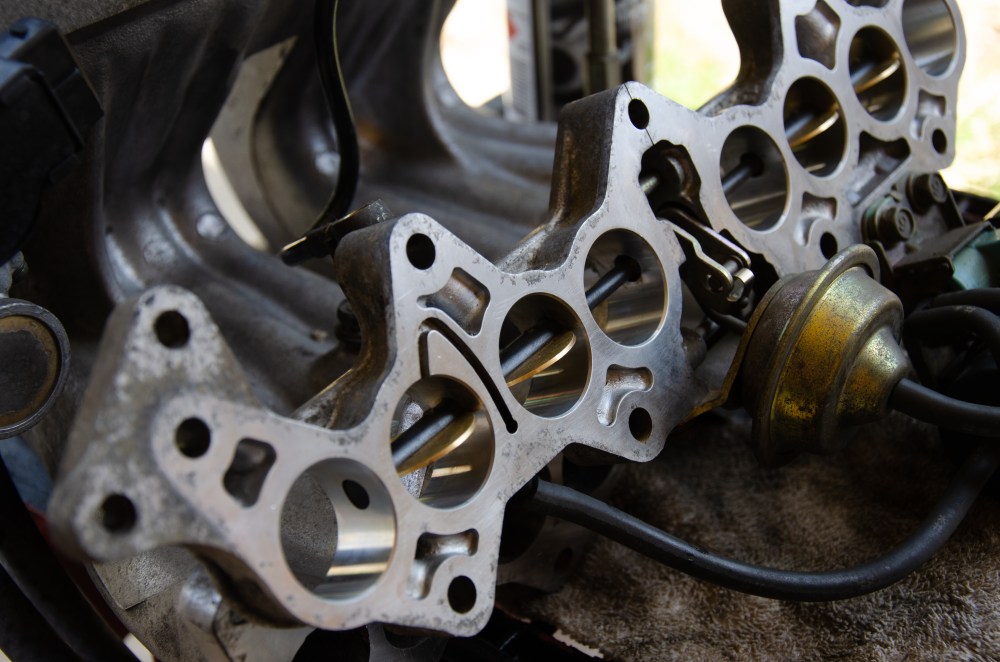
Anyway, that aside – I managed to clean up the system a bit with a can of carburettor cleaner. It turned out better than expected 🙂

After doing a final wipe down, and an installation of new gaskets, I fitted the entire unit into the head 🙂

 IAD
IAD 